Festivals & Culture
Kulasai Dussehra
In Kulasai, gods are born, dance, dissolve only to rise again from fire, color, and faith.
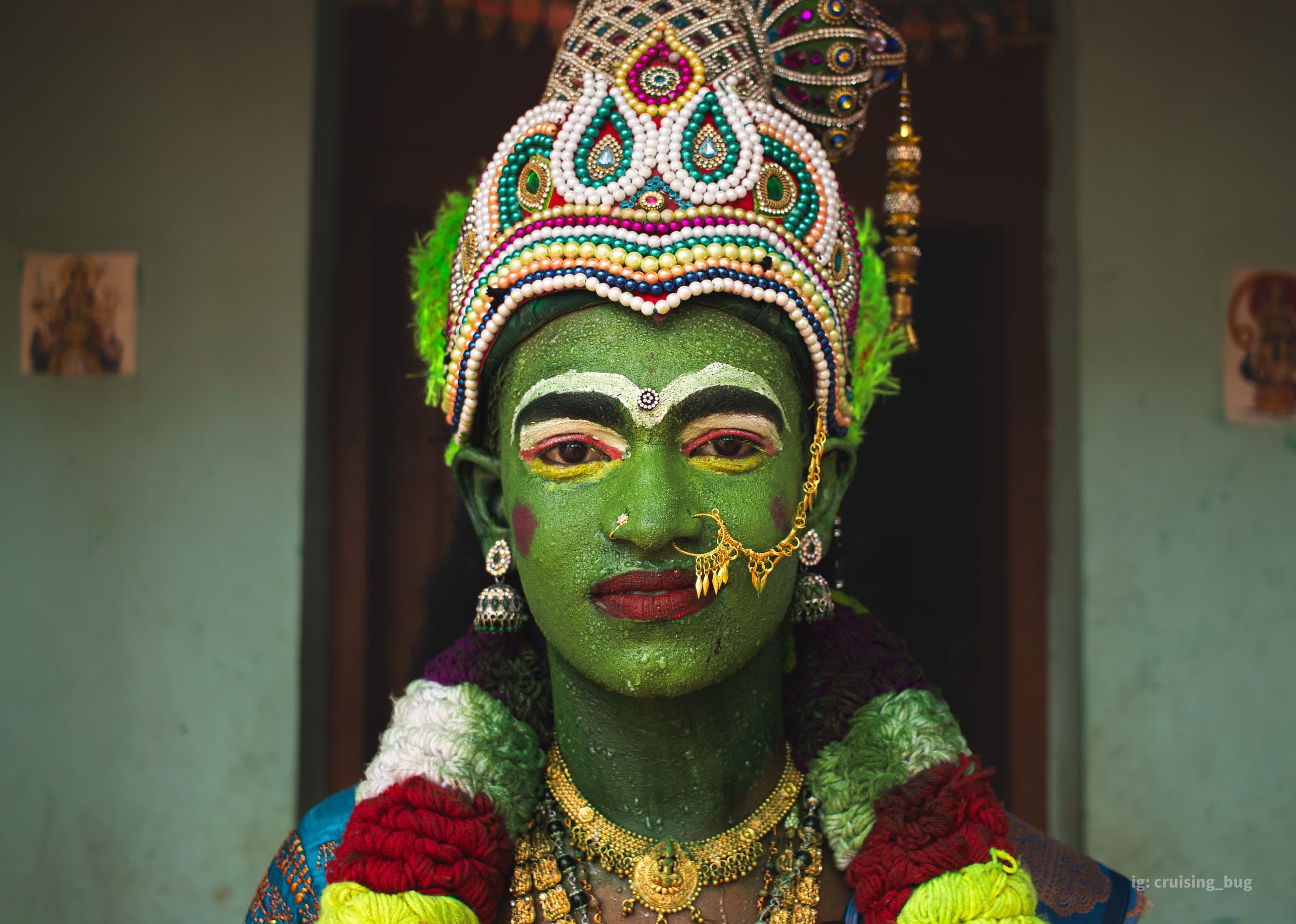
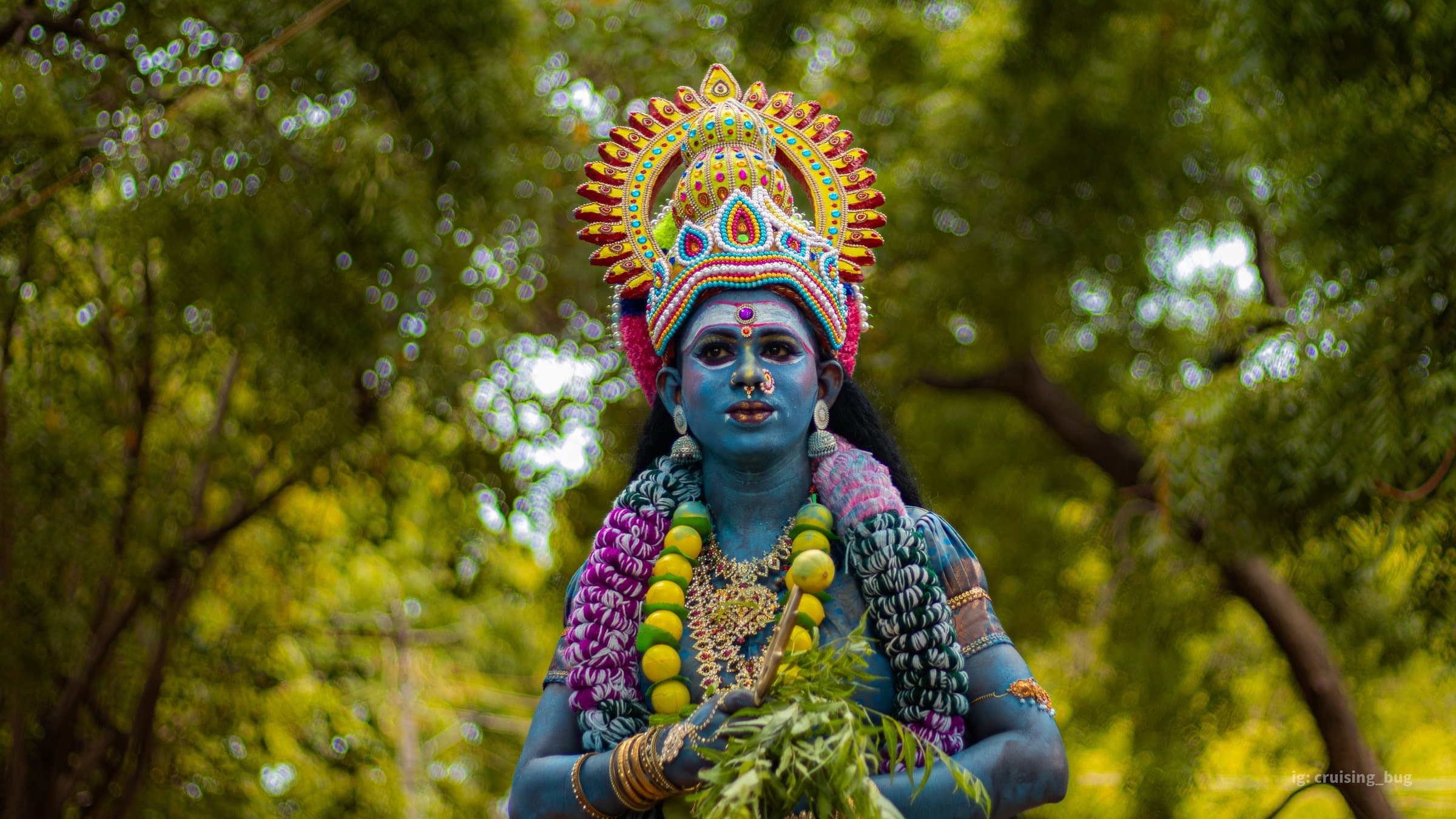
Beneath the paint and jewelry, this devotee becomes Goddess Kali herself. After weeks of fasting and devotion, he dons the fearsome garb and skull necklace of Kali—believing her spirit now flows through him.
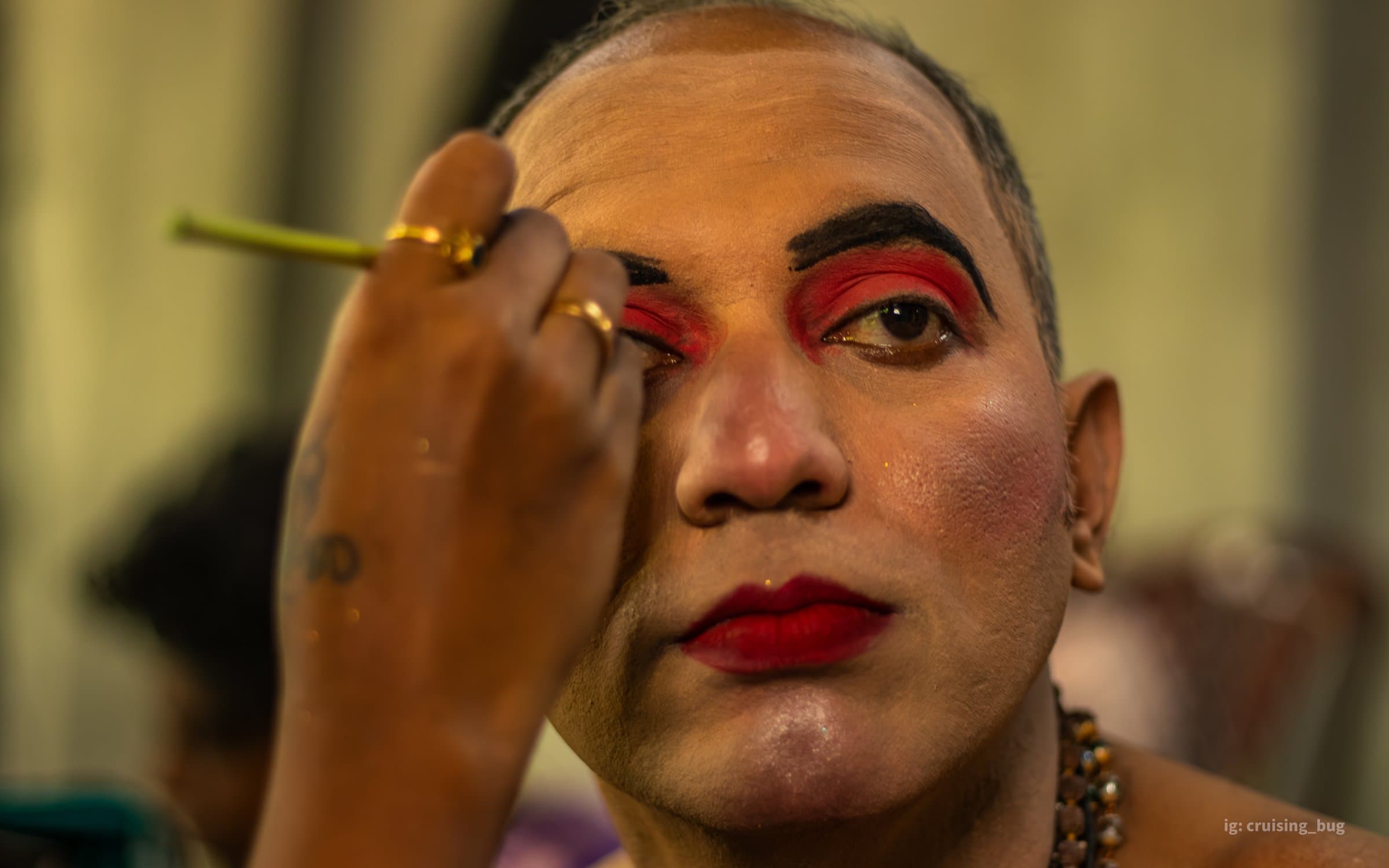
The first stroke of color marks devotion. Faces become canvases, each line a symbol of surrender to the divine.
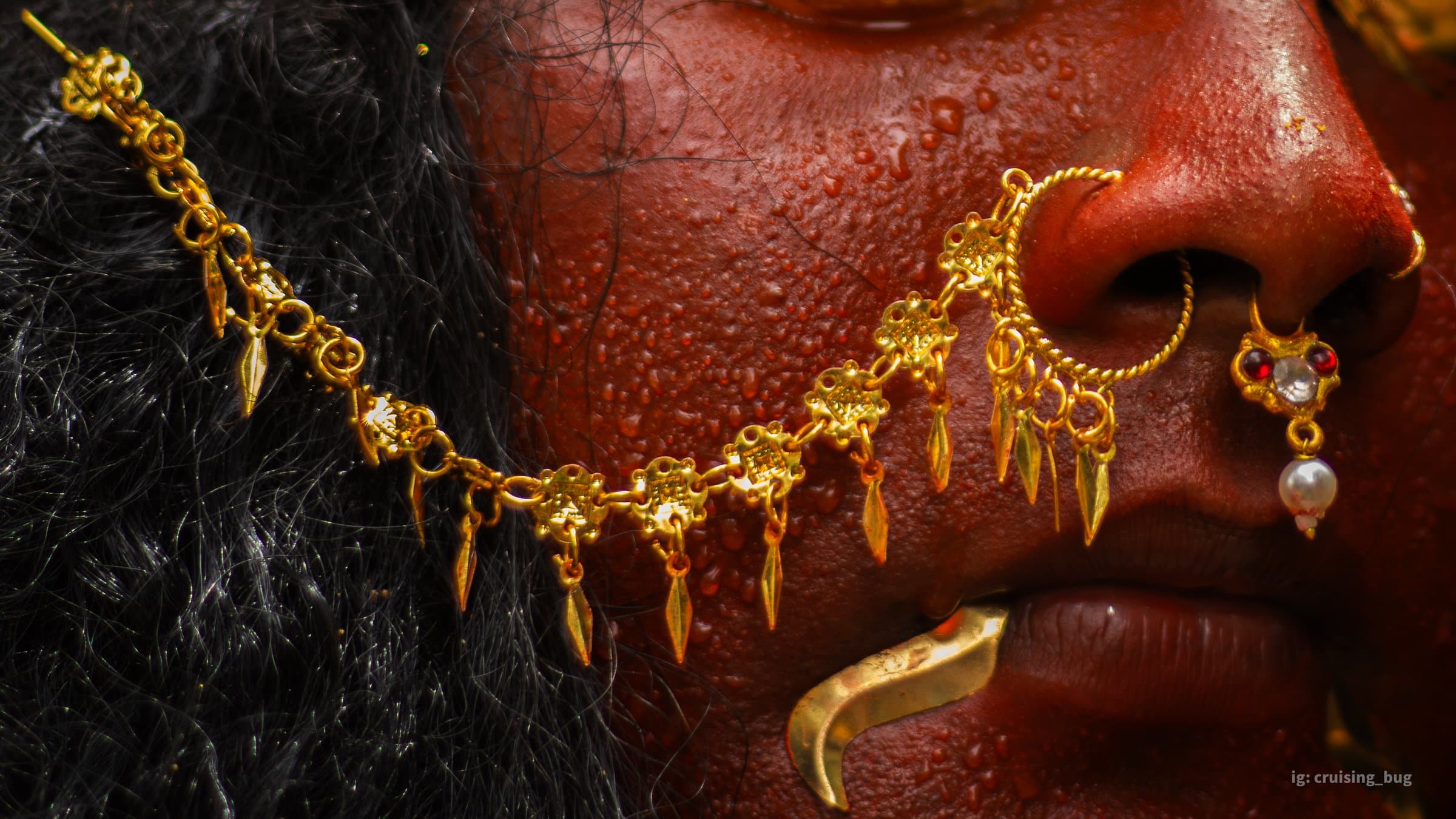
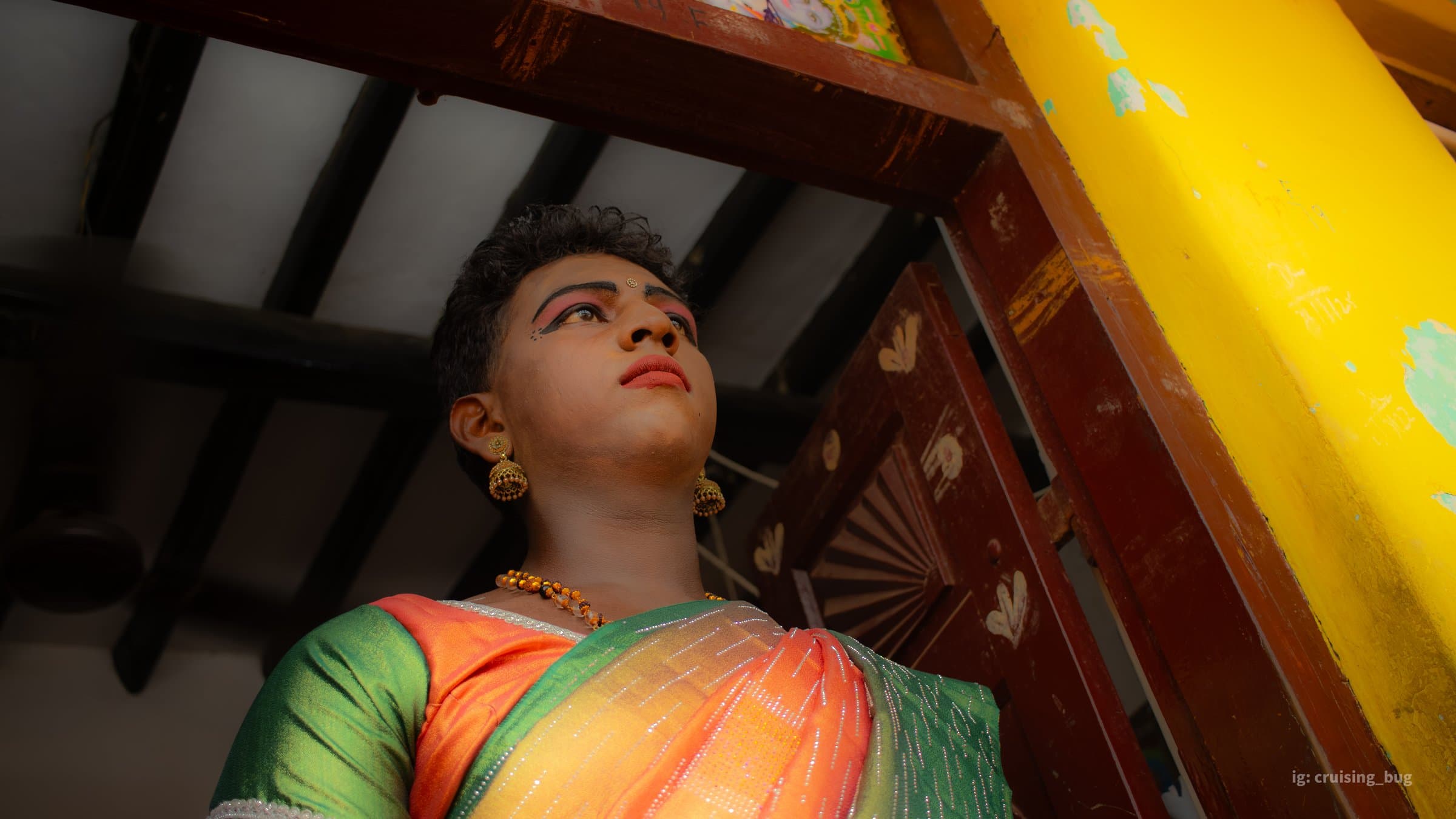
The paint cracks, the eyes soften — what was divine returns to human form. Each face tells a story that no word can fully capture.
They dress as Kali, Shiva, Vishnu, hunters, and gypsies — no one is ordinary here. For a few days, every soul becomes a god in motion.
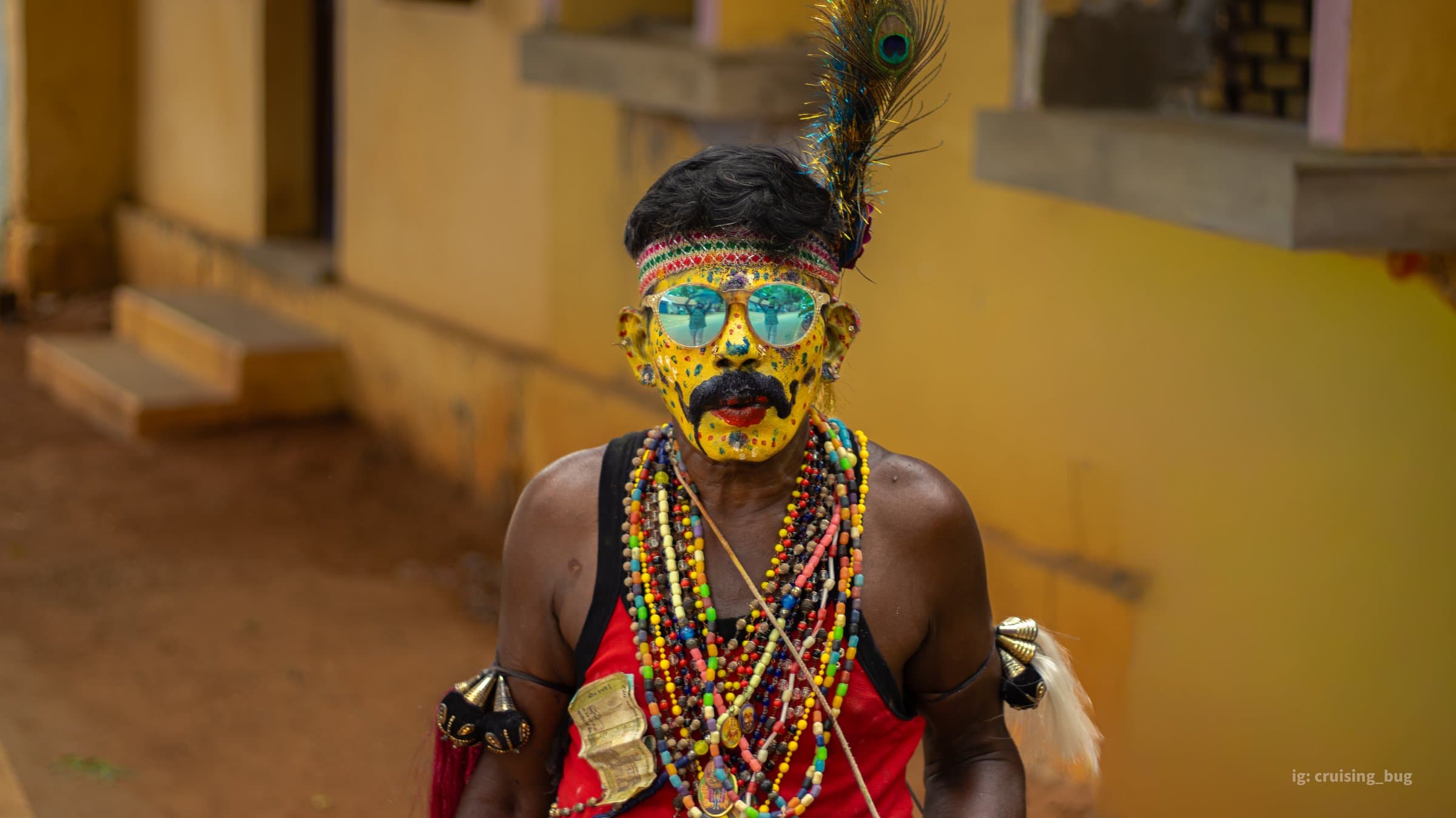
A burst of color on the streets – devotees dance past with painted faces, giving their all. In Kulasekarapattinam, each procession is an offering: men and women leave home in full costume (even as monkeys or Kali warriors) to collect alms and blessings for the goddess.
The drama reaches its peak on the beach. Costumed as Kali, devotees dance triumphantly by the sea, re-enacting Durga’s slaying of Mahishasura. Then the crowd plunges into the ocean together — a sacred purification bath to mark the goddess’s victory.
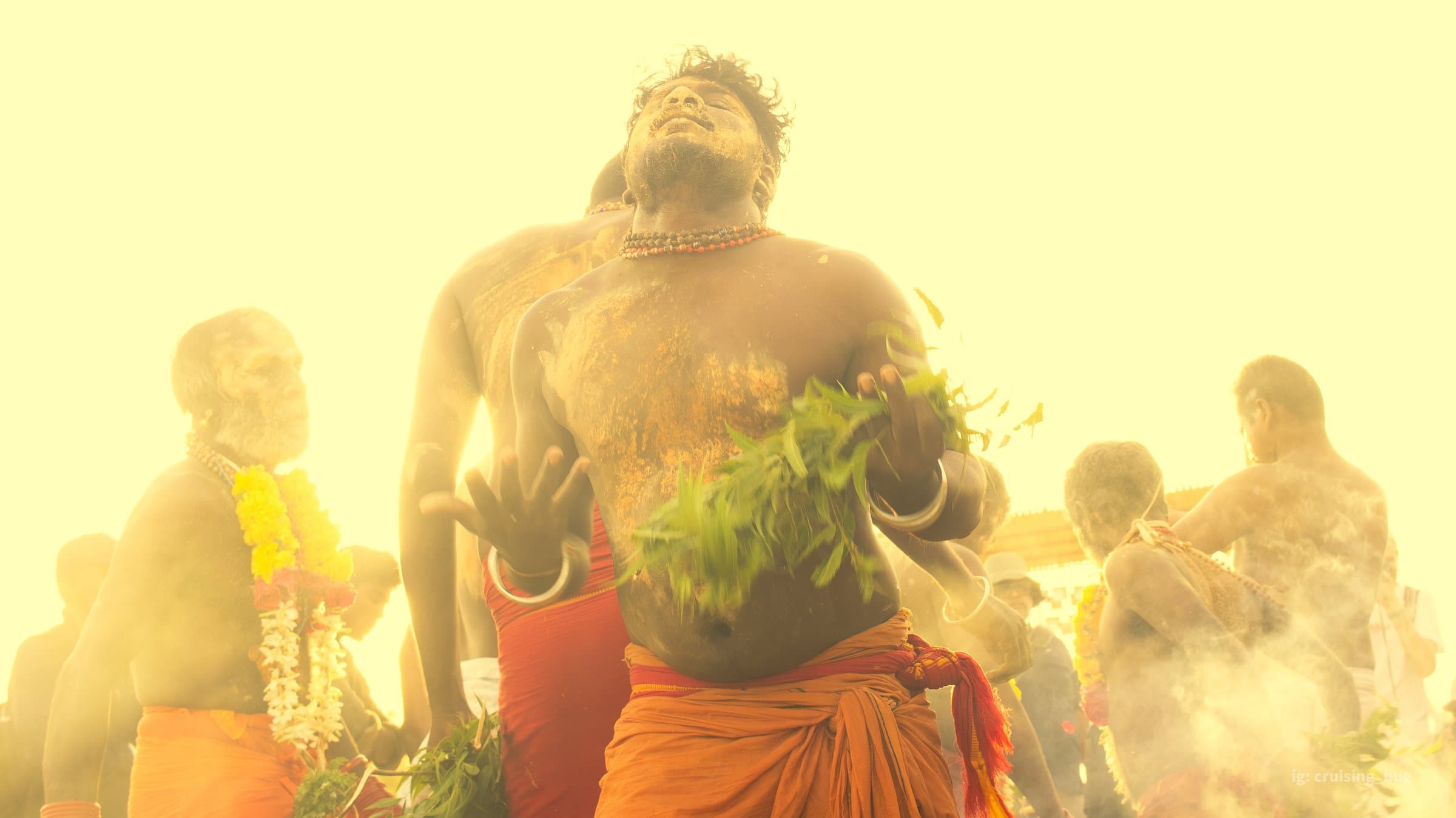
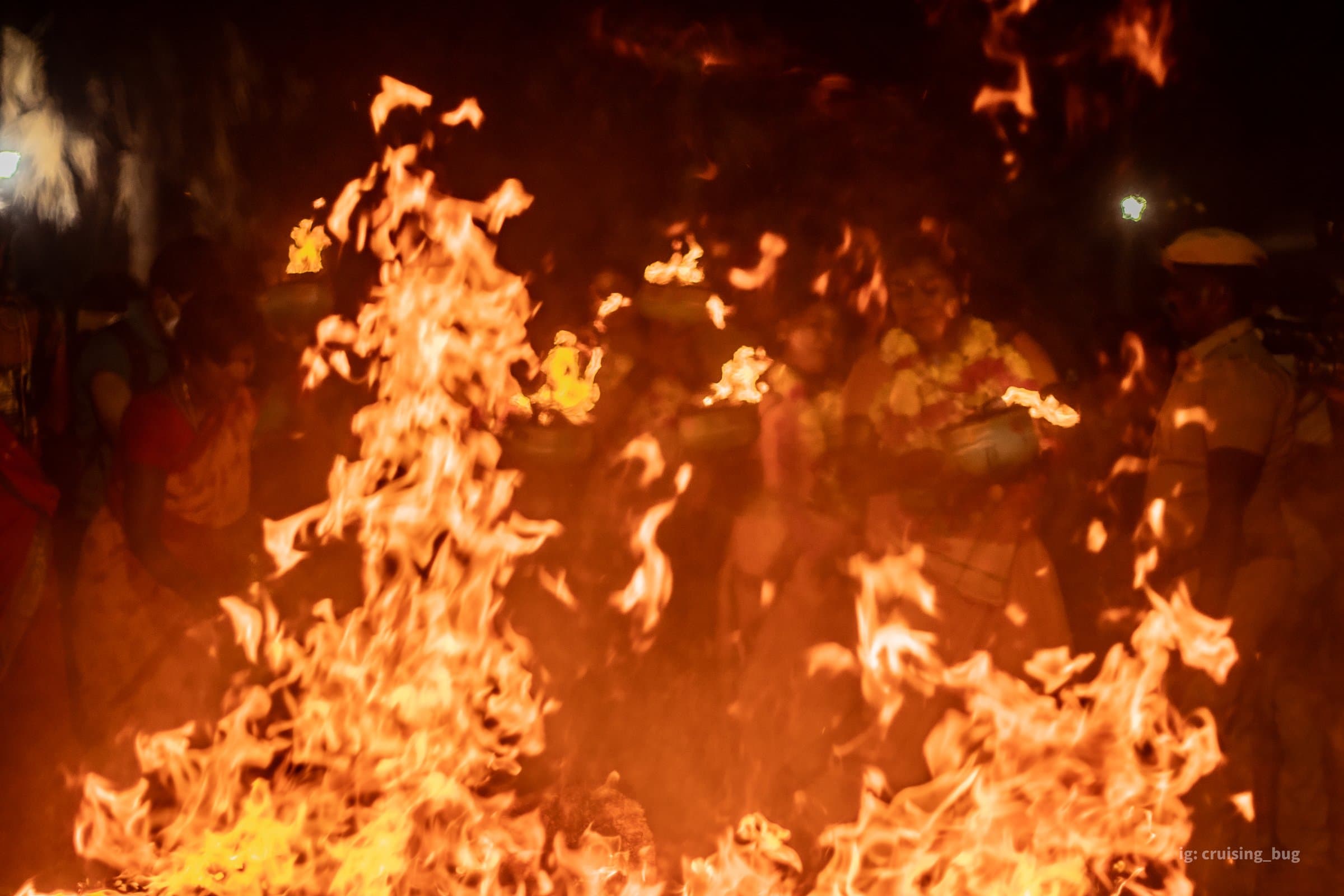
The fire becomes the heart of the night, burning steady against the coastal wind. Its glow draws devotees closer, their faces lit in orange and shadow. Around it, chants echo through the crowd, rising and fading like the tide. The flames purify and consume, carrying each prayer upward — a bridge between the mortal and the divine. In Kulasai, every spark feels alive, a moment where faith breathes through fire.
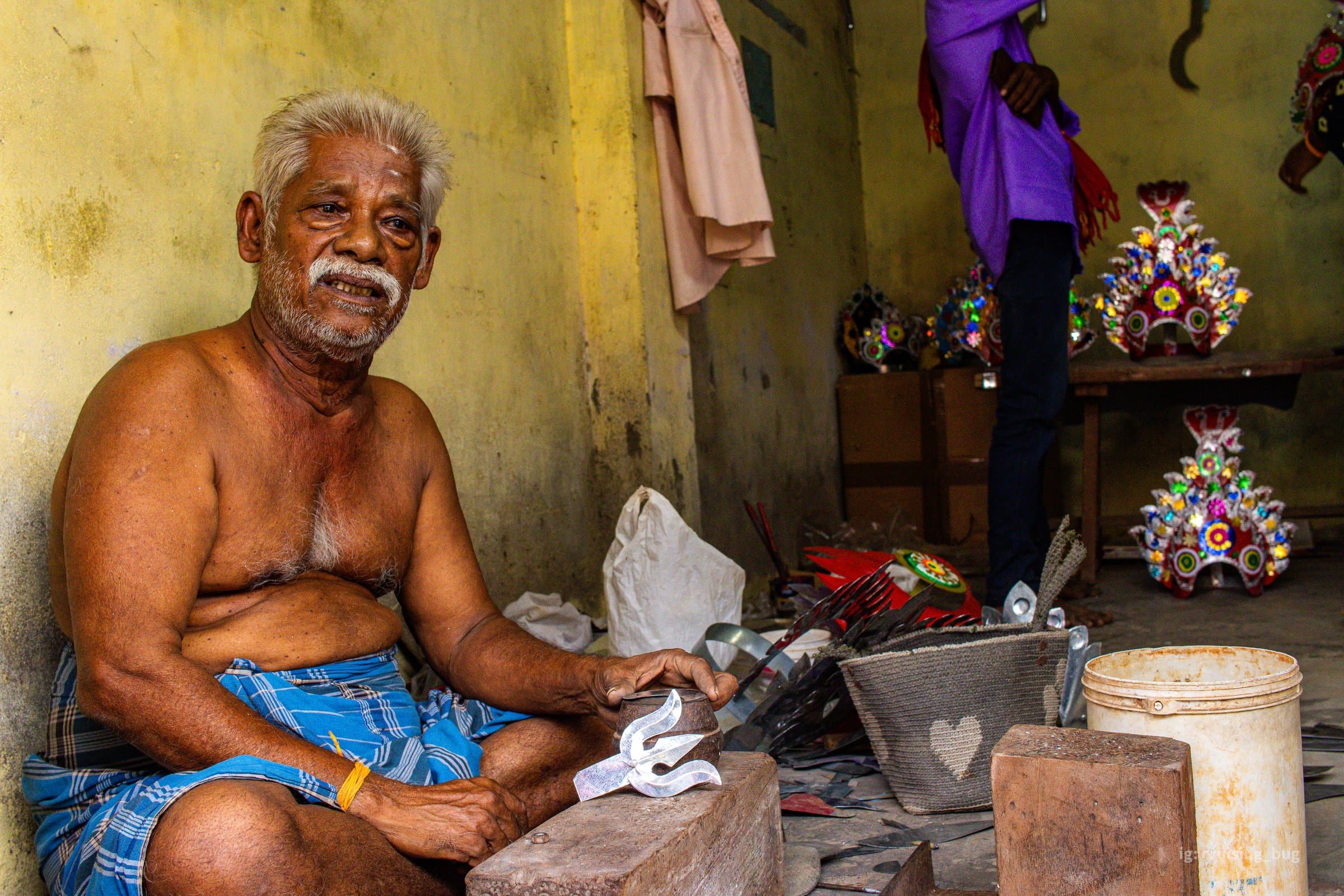
In a quiet corner of the village, away from the festival drums, the makers of crowns and swords work by lamplight. Their hands move with inherited rhythm — shaping bamboo, metal, and fabric just as their forefathers did. Each kireedam carries not only craft but memory, passed down through generations devoted to the goddess. For them, creation is worship; the tools of the avatars are born from both skill and faith. In every curve and shine lies a story of lineage, labor, and belief that outlives time.
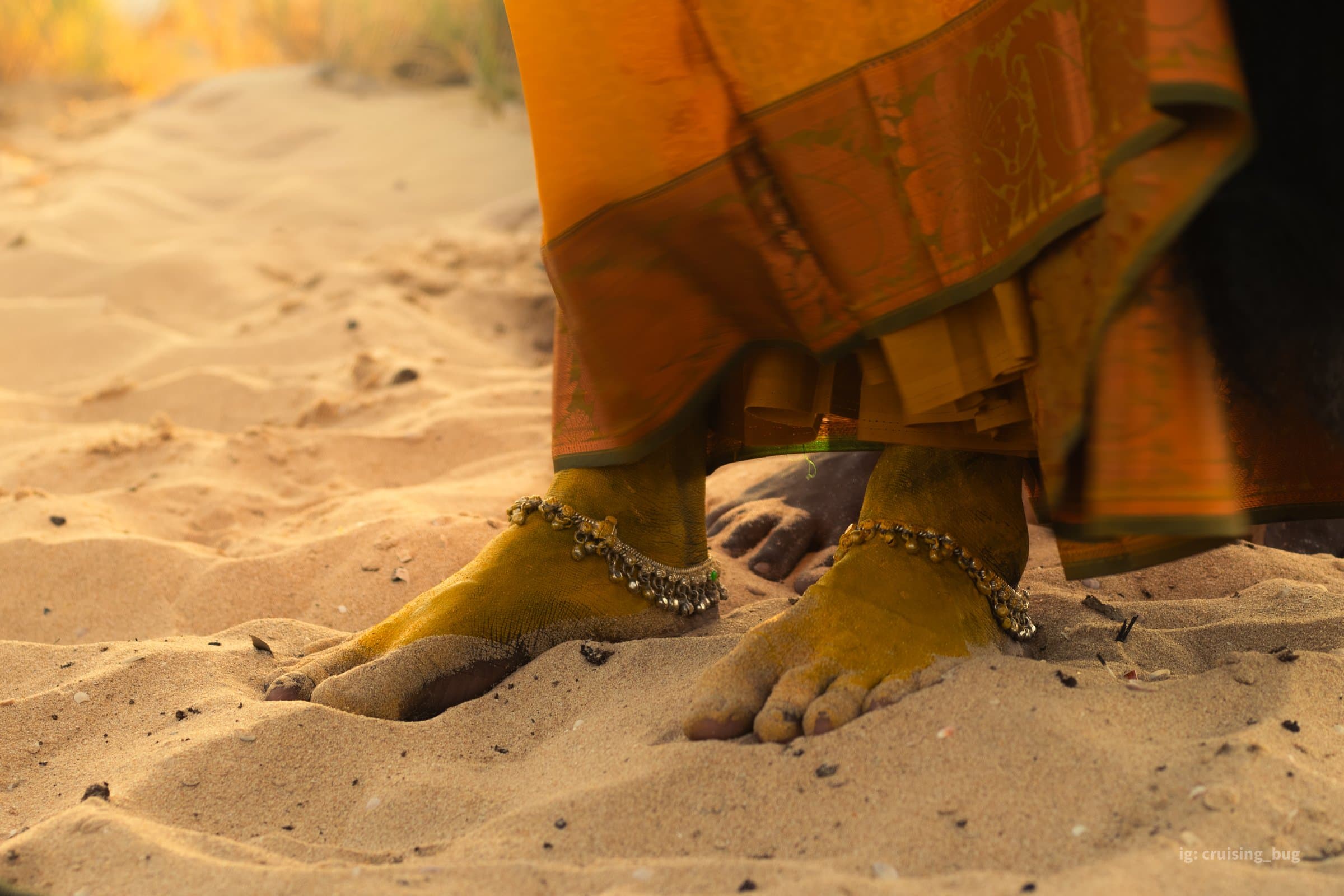
Hands clutch swords with steady reverence, each grip a silent pledge to the goddess. Feet pound the earth in rhythmic dance, raising clouds of turmeric and dust that stain skin and soul alike. Bodies move as one with devotion, every gesture and step a living embodiment of myth. In the sway of arms, the flash of blades, and the golden dust that clings to legs, the avatars become more than human — they are devotion made visible, fierce and sacred.
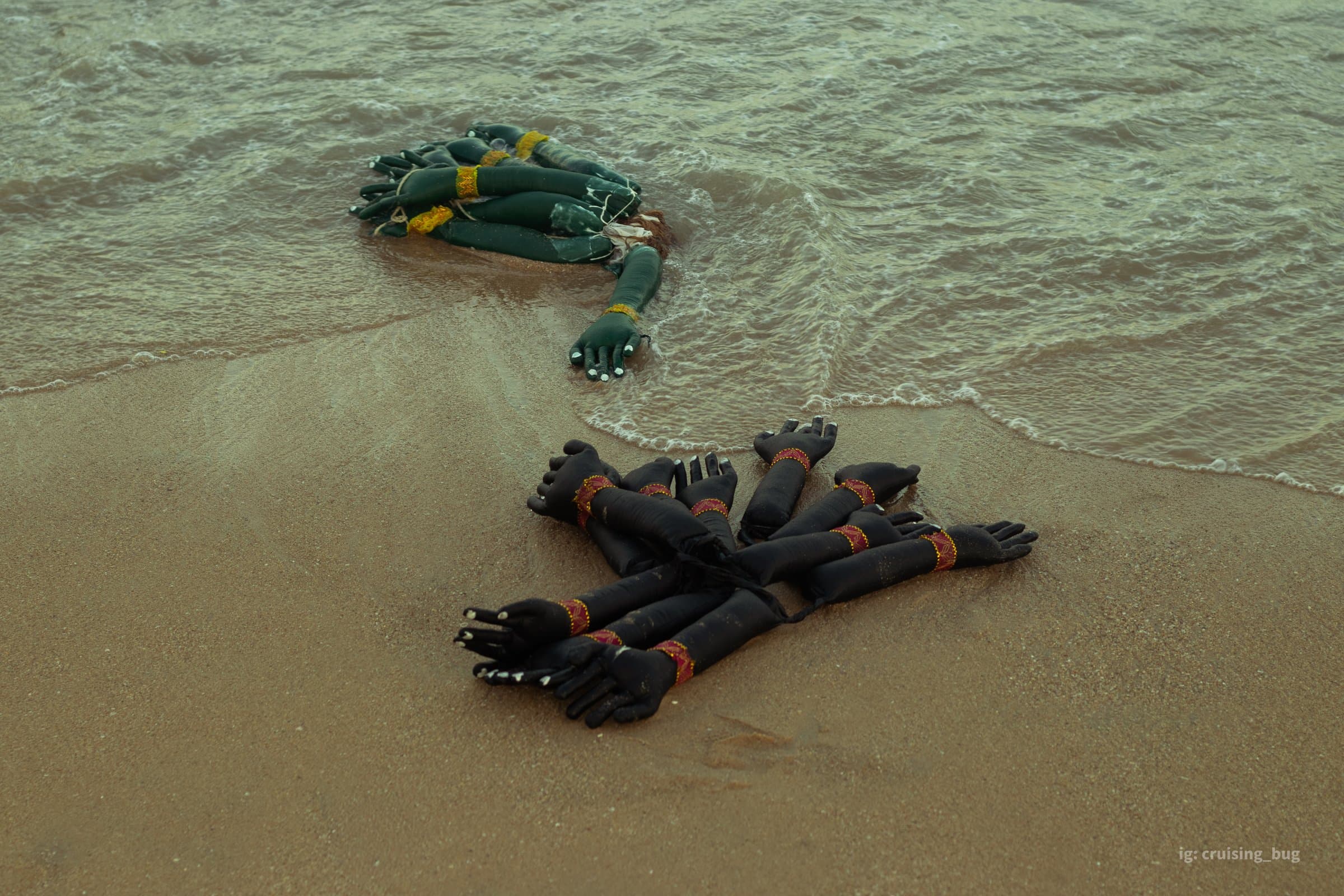
The shoreline turns into a sacred stage for the festival’s final act. As dawn softens the sky, devotees step into the sea, their painted bodies fading under the waves. Costumes lie scattered along the sand — masks, beads, and traces of color merging with the tide. The ocean accepts what the fire once awakened, closing the circle of devotion. In the hush that follows, only the sound of waves remains, a quiet witness to faith returning home.